Friday, November 20, 2020

2020 Top 5 Picks - Part Two

Let's continue the top five selections from the Boswellians with some wildly varying picks from Conrad, Barb, and Rose! I'll begin with Conrad. If you haven't read the bio on Conrad's staff picks page, then perhaps you don't know that he's been in booksellings since 1976, when he started at Gilman Street Bookstore in Madison, a Marxist bookstore that paid him in books rather than money. Conrad's tastes are wide, smart, and varied, and he's a great recommender for anyone who looking for a book to expand their reading horizons. More than one of his picks made our 2020 Holiday Gift Guide this year, and for good reason!

#1 on his list is The King at the Edge of the World, a new novel by Arthur Phillips. Conrad says, "For the life of me, I can't figure out why Arthur Phillips isn't a better seller. His stories are diverse, beautifully written, and engaging. His characters are fully realized and complex. He never repeats himself. This is his sixth novel, and it's simply wonderful. We follow a sophisticated, cosmopolitan, and intellectually curious doctor who is forced to leave his home in one of the world's most glittering metropolises and accompany an embassy to one of the world's most depressingly squalid, backwater cities." But don't take it (only) from Conrad - from the New York Times Book Review: "Sentence by sentence, the book blends the leanness of a taut thriller with the marbled fatness of Elizabethan prose."

Conrad's #2 is the latest from David Mitchell - Utopia Avenue. He'll correct me if I'm wrong, but I do believe Conrad has read everything Mitchell's ever written. I know that since I've worked with him, every time a new Mitchell novel comes out, it quickly becomes a go-to rec when someone asks Conrad what to read. This one is set in London’s psychedelic scene in 1967 and follows the kaleidoscopic tale of the turbulent life and times of the strangest British band you’ve never heard of. 

Keeping with the musical theme, #3 is a nonfiction title: We're Not Here to Entertain: Punk Rock, Ronald Reagan, and the Real Culture War of 1980s America by Kevin Mattson.  From Conrad: "Maximum rock and roll played at warp speed with lyrics more screamed than sung took punk into a new direction, one driven by utter and total rage. To the new bands emerging in the Eighties, the first generation of punks had grown complacent: sold out making disco music (Blondie), or folded (Sex Pistols), or morphed into the very thing they had once rebelled against (bands playing in massive arenas). Punk now adopted a very self-conscious stance against the right-wing corporate power grab of the Reagan years. You want the Eighties? This is the Eighties!"

#4 - The Year 1000: When Explorers Connected the World - and Globalization Began by Valerie Hansen. Celebrated Yale professor Hansen offers up this groundbreaking work of history showing that bold explorations and daring trade missions connected all of the world’s great societies for the first time at the end of the first millennium. For readers of Jared Diamond’s Guns, Germs, and Steel and Yuval Noah Harari’s Sapiens, this book is an intellectually daring, provocative account that will make you rethink everything you thought you knew about how the modern world came to be. It will also hold up a mirror to the hopes and fears we experience today.

#5 is the latest from the internationally bestselling German author Daniel Kehlmann called Tyll. Again I'm going with what I think is true, though I may be unintentionally bending the truth (though that would be a perfectly fitting thing to do for this recommendation) when I say that Conrad remains appalled that I still haven't read this one yet. See, I was a huge fan of Kehlmann's previous release, the novella You Should Have Left, and when Conrad got his hands on this new novel before me, he read it and immediately told everyone how amazing it is. I promise, it's on the TBR pile, Conrad! And, good reader, you'll want to add this story about the devastation of war and a beguiling artist’s decision never to die to your stack, too!

Onto the next bookseller! Barb the Boswellian is the undefeated champion of handselling in the childrens section, especially when it comes to funny, touching picture books, early chapter books, and middle grade novels. Though alas she hasn't been able to be in-store this year, she's still reading like a champ. Here are her picks for the best of 2020:


#1 Agent Lion by Jacky Davis and illustrator David Soman. This wife and husband team behind the bestselling Ladybug Girl series brings us one seriously silly but determined detective. In this picture book, when Fluffy the cat goes missing, this jelly donut-loving lion detective is on the case! Meet all the zany animals, laugh out loud, and follow the twists and turns as this lion detective searches for this elusive feline. 

#2 Honeybee: The Busy Life of Apis Mellifera by Candace Fleming and illustrator Eric Rohmann. Take to the sky with Apis, one honeybee, as she embarks on her journey through life. The New York Times declares this is "a fascinating up-close view of the stages of a honeybee's life... The drama and suspense are positively riveting." Barb isn't the only one who lauded Honeybee - it received starred reviews from Booklist, School Library Journal, and Publishers Weekly, which said, "The brief but complex life of a Apis Mellifera—a worker honeybee—is explored with depth in this richly detailed picture book."

#3 Our Friend Hedgehog: The Story of Us by Lauren Castillo. You can tell just by the cover illustration that this is going to be a Barb kind of book, though far be it of me or anyone else to just judge a book's cover without opening it up. Caldecott Honoree Castillo opens a new series of early chapter books (ages 5 - 9) with a ragtag band of woodland and meadow creatures in a story that balances small but thrilling escapades with an earnest, whimsical, often droll friendship story. This is another of the kids books this year in which the phrase "instant classic" has been tossed around by reviewers.

#4 Black Brother by Jewell Parker Rhodes. The first of two middle grade (ages 8-12, roughly) novels on Barb's list is a coming-of-age story about two brothers, one who presents as white, the other as black, and the complex ways in which they are forced to navigate the world. Author Parker Rhodes is the author of Ghost Boys and a Coretta Scott King Honoree. This is a careful examination of the school-to-prison pipeline and follows one boy's fight against racism and his empowering path to finding his voice.

#5 On The Horizon by Lois Lowry. Barb's last selection is another book for middle grade ages (the publisher copy says 10-12) by two-time Newbery medalist and legend Lowry. This is a moving account of the lives lost in two of WWII’s most infamous events: Pearl Harbor and Hiroshima. With evocative black-and-white illustrations by SCBWI Golden Kite Award winner Kenard Pak. Lowry looks back at history through a personal lens as she draws from her own memories as a child in Hawaii and Japan, as well as from historical research, in a work in verse for young readers.

Finally, we'll wrap this post up with the top five selections from Boswellian Rose. As you can see from her selections, I think it's fair to say that Rose has an interest in books focused on mindful self-improvement. Here are her picks:

#1 Untamed by Glennon Doyle. This is one that we've had a hard time keeping on our shelves off and on throughout the year due to the high demand. Of course, what else did anyone expect for the follow-up book to the Oprah's Book Club Selection Love Warrior? Speaking of book clubs, Untamed was a Reese’s Book Club x Hello Sunshine Book Pick this year, along with being one of Rose's favorites.

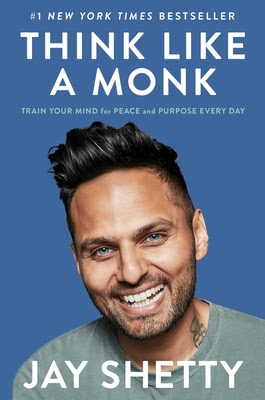
#2 Think Like a Monk: Train Your Mind for Peace and Purpose Every Day by Jay Shetty. From the social media superstar and host of the wildly popular podcast On Purpose, this how-to offers advice and practical steps anyone can take every day to live a less anxious, more meaningful life that Shetty distilled from his time as a monk. Combining ancient wisdom and his own rich experiences in the ashram, Think Like a Monk is focused on methods for overcoming negative thoughts and habits and accessing the calm and purpose that lie within all of us.

#3 on Rose's list is The Journey Home: Autobiography of an American Swami by Radhanath Swami - not a new book, but by Jason's top-5-ing rules Boswellians can have one or two older titles on their shelves if they just discovered them. So, Rose hopes you will discover the story of Radhanath Swami, who, at age nineteen, he traveled overland from London to India, where he lived in Himalayan caves, learned yoga from revered masters, and eventually became a world-renowned spiritual leader in his own right.

#4 Growing Old: Notes on Aging with Something like Grace by Elizabeth Marshall Thomas, anthropologist and author of The Hidden Life of Dogs. This is a witty, engaging, life-affirming account of the joy, strength, and wisdom that comes with age. Sy Montgomery, author of The Soul of an Octopus, says "By turns hilarious, poignant, fascinating, and disturbing, every page is brutally honest. If you ever plan to grow old or know anyone else who's already there, you'll find insights here you'll see nowhere else."

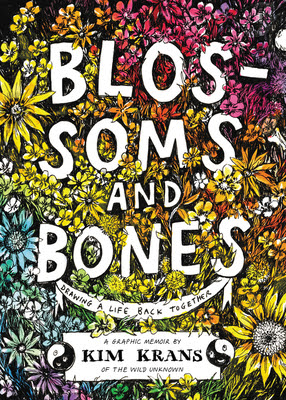
And wrapping up at #5 is artist Kim Krans's Blossoms and Bones: Drawing a Life Back TogetherAfter cancelling her flight home to wellness-obsessed LA, where Krans had been secretly experiencing a debilitating eating disorder, she finds her way to an ashram and seeks spiritual and creative refuge. For forty days she relies on “drawing the feeling” as a way to realign her relationship to food, addiction, fertility, perfectionism, and the endless messaging of “never enough” echoing throughout current culture. She embarks on the healing process through intricately hand-drawn narration of both her inner and outer worlds. Radical simplification, meditation, community, and creativity bring her through the darkest chapter of her life. 

And there you have it! A selection of top fives as varied as the Boswellians themselves. Stay tuned to the Boswellians blog for more top 5 posts coming soon. And you can check out post #1, featuring the Top 5 selections of Amie and Jason, right here, too.

Monday, November 16, 2020

2020 Top 5 Picks - Part One - from Our Buyers Amie and Jason

November has come and halfway gone, and for booksellers, that means we're now reading books that won't hit our shelves until next year. It also means that each of us has compiled and completed our list of favorite books of 2020. Some of these you've perhaps seen featured in our newsletters over the year as staff picks, and a handful of them have even made their way into our yearly gift guide, which hit mailboxes this week! (Note - you can also browse our full gift guide on the Boswell website - click right here to see it now!) Over the next couple of week on the blog, we'll feature these top 5 lists, a few booksellers at a time. Maybe you'll have your favorites confirmed, or maybe you'll even find a new favorite that you missed this year. So enjoy part one of our year-end wrap-up!

Why not start at the very beginning (a very good place to start) of the alphabet with the top 5 selections of our kids book buyer Amie! Here they are:

#1 Elatsoe by Darcie Little Badger, illustrated by Rovina Cai
This young adult novel earned starred reviews from lots of places, not just Amie! In a particularly gushy review, Kirkus called this book "A brilliant, engaging debut written by a talented author, it seamlessly blends cyberstalking with Vampire Citizen Centers and Lipan Apache stories."

#2 If You Come to Earth by two-time Caldecott Medalist, illustrator Sophie BlackallThis stunning book is inspired by the thousands of children Blackall has met during her travels around the world in support of UNICEF and Save the Children. This is both a guide to our home planet and a call to action - to take care of our home and each other.

 Eric by Shaun Tan
I know that Amie debated making this her top pick of the year, and we only held it back from the gift guide because we want to feature many different authors, and last year's guide featured Tan's brilliant Tales from the Inner City. That said, I think if Amie could make a Shaun Tan book top her list every single year, she probably would. Eric is the story of a foreign exchange student (a stand-alone, expanded picture book story adapted from Tales from the Inner City) who visits a suburban family and brings with him boundless curiosity.

#4 The Time of Green Magic by Hilary McKay
From the many-award-winning McKay comes this middle grade novel that the New York Times Book Review calls "utterly enchanting... an instant classic." And I believe Amie would agree. This one did make our gift guide this year, and for good reason. It earned starred reviews from just about every publication that offers both reviews and stars to books. It's the story of Abi, whose father remarries and moves them into a strange, ivy-covered, and perhaps magical new home.

#5 Skunk and Badger by Amy Timberlake, illustrated by Jon Klassen
Well, if you follow this blog, or really, just about anything that we put in writing and send to our wonderful loyal customers, then you know that we are just a little bit obsessed with Skunk and Badger. Timberlake joined us for one of our virtual events recently - check out the video here. And Klassen's full color, full page illustrations give this odd couple tale a timeless feel. You won't be the same after you make friends with this duo!


And now, onto Jason, our adult book buyer, and his favorites of the year!

#1 Before the Coffee Gets Cold by Toshikazu Kawaguchi
Several of us have become fans of the books Hanover Square Press has been putting out recently (you'll note another in Chris's top 5 list, to be posted in a later blog) and so it isn't too much of a surprise that one of their big books for the fall is one of ours, too. Jason and Kay both wrote up staff recs for Kawaguchi's novel, about a cafe in which those who sit with a cup of coffee can travel through time. As Jason notes, there are a lot of rules, but ultimately, Jason says, "the simple, the emotions complex, and I really enjoyed my time spent in the hole-in-the-wall cafe."

#2 The Only Good Indians by Stephen Graham Jones
Anyone who's spent five minutes this year in a conversation about books (okay, honestly, about almost anything) with Jason has almost certainly heard about Graham Jones from him. He's convinced more than one of us on staff to try SGJ's writing, and he has definitely been excited to talk to more people about it. About The Only Good Indians, Jason says, "Stephen Graham Jones depicts Native Americans on and off the rez; the hardness, the bleakness and briefness of life there. There's some beauty in there, too. The sweat lodge scene and the meaning behind it was really engaging and great, until the killing started. This book will kick out at you when you least expect it to, and you will love it."

#3 The Relentless Moon: A Lady Astronaut Novel by Mary Robinette Kowal
Jason runs our in-store (virtually, these days) Sci Fi book club, and that's because of all the people in the store, he is THE go-to sci-fi-guy. So another not-so-surprising thing in this blog post is that he would add the Hugo and Nebula Award-winning series to his list! Jason says, "Mary Robinette Kowal does an amazing job at looking at the personal ramifications as well as the political and social ones of a world hurtling towards disaster. Can't wait for the next volume!"
#4 Tender Is the Flesh by Agustina Bazterrica, translated by Sarah Moses 
This one is intricate, so perhaps it's best if I share Jason's full rec:
"After a virus put animals on the brink of extinction (humanity helped by killing all animals they thought could get them sick, too!), you would think we would become Vegans. Guess again. Cannibalism has become state sanctioned, and Marcos heads up one of the meat processing plants. Agustina Bazterrica takes us brutally by the hand and drags us through the entire process, from the ranchers that raise the ‘cattle’ to the meat processors and tanneries. To say that some of the descriptions are disturbing is putting it mildly. The story really kicks off when Marcos gets a gift from El Gringo, a female FGP. Not understanding what to do with her (as he says, 'he kills head, he doesn't breed them'), he ties her up in the barn and goes off to work. Through Marco's eyes we see and hear all the horrific ways humanity has created 'special meat' for the world to eat, and how that meat is treated, hunted, and used. This book is not for the squeamish - I LOVED IT!"

#5 We Keep the Dead Close: A Murder at Harvard and a Half Century of Silence by Becky Cooper
This true crime tome was a late addition to Jason's list this year, I believe. He's not the only one contributing to the hype - it's a recommended book by The New York Times, Publishers Weekly, The Washington Post, Town & Country, and the list goes on and on. The set up: in 1969, at Harvard University, Jane Britton, an ambitious twenty-three-year-old graduate student in the Anthropology Department was be found bludgeoned to death in her Cambridge, Massachusetts apartment. Jason didn't write a formal rec for this one, so let's hear from another bookseller: Camille Kovach, Completely Booked, Murrysville, PA, who says, "Delving into the academic culture of Harvard, the misogyny of the 1960s, and the burgeoning women’s rights movement, the story follows several threads, all of which have a significant impact on the life of Jane Britton, whose story is told with empathy, compassion, and five decades of curiosity."

Okay! If you don't like to wait, you can see the full list of Boswellian top 5 picks (sans notes on each book as seen above, alas) right here on our website. Keep an eye on this space, too, as we'll have another list of picks up soon!

Monday, October 19, 2020

Tim Returns to Minnesota!

Hi again from Tim! In my mind, I'm back in Minnesota. Maybe you saw my Gone to Minnesota in My Mind blog last month, where I told the odd truth that I've barely been to Minnesota, and yet I've loved several novels placed in our neighboring state. Every one of those authors have also done Boswell events. Now it’s time to add one more. I just finished The Land, by Thomas Maltman, and enjoyed every minute! It's mysterious, and dangerous, with hints of the supernatural, and the voice of young Lucien Swenson in early manhood is thoroughly likable. Maltman is doing a Boswell Zoom event on Thursday, October 22nd at 7 pm CDT, in conversation with William Kent Krueger, the author of two books from my original Minnesota blog. Click right here to register now - I can't wait!

The Land
is a fine coming of age story, told in convincing style by Lucien, a young man in the throes of forbidden love as he recovers from a terrible accident. But where is Maura? The young mother he fell for while they both worked at a bank is gone, and money from the bank is missing too. Now Lucien has taken a position as caretaker for a large estate in the Minnesota wilderness while the owners are away, near a shadowy church congregation where Maura’s violent husband preaches dark messages about the end of the world. Lucien is determined to find out about this church and the secluded place they call The Land. He needs to find out why Maura disappeared. It’s a well built mystery, with unexpected guests and elements of horror. Lucien’s migraines and other effects of his injuries have him seeing signs in the raw winter and questioning what’s real, giving the novel an eerie feel and a spiritual search for revelation. I enjoyed every bit of this story and its conflicted cast of characters. An exceptional novel!

If you read my first Minnesota blog, you may have seen the way I teased an entire state with my tongue-in-cheek take on James Taylor’s Carolina in My Mind. I took a little heat about that from a Minnesota friend, and I used it to do an update. Here’s the new version. Enjoy the beautiful Midwest fall!

In my mind I’m gone to Minnesota.
Can’t you feel the snowfall?
Just leave your boots out in the hall.
Car gets stuck, and then it stalls.
Ya get hit from behind.
Yes I’m gone to Minnesota in my mind.

Heard some stuff from a Facebook friend who lives there.
When my verse reduced her home to misery in snow.
It’s not a bad place, she said.
For a bit I hung my head.
But held on to a longing for 
this place I’ve never known.
I’m still gone to Minnesota in my mind. 
  
                                     - Sweet Baby Tim

Monday, October 12, 2020

Jenny Has Five Questions for Shannon Takaoka

From Jenny: I’ll read books from any section of the bookstore, but I’m drawn to two genres in particular, and they are wildly different. Anything from the YA fiction shelf and what I call medical science sleuthing nonfiction are my absolute favorites. When Daniel gave me a five-hundred page book on the elegance of the human immune system, I read it like a fast-paced thriller (ed note: An Elegant Defense, by Matt Richtel.) A book about the race to find new antibiotics to take on superbugs? Fascinating. And please send all YA books my way that feature a complexity of emotions, swoony kisses, and cleverly written, laugh-out-loud banter. Add in self discovery or non-stop bickering/simmering passion, and I will be totally hooked.

Everything I Thought I Knew is a mash-up of my two favorite genres, and I’m thrilled to welcome author Shannon Takaoka to the Boswellians Blog today to chat with me about writing, self-discovery, and so much more.

JENNY CHOU: Hi Shannon, and congratulations on the publication of your debut novel. I’m so glad you’re here to tell blog readers about Everything I Thought I Knew. Your main character, Chloe, collapses during cross-country practice during her senior year of high school, which leads to a heart transplant. Recovering from something like that would be challenging enough, but she’s got a lot more going on. Can you fill us in on what she’s experiencing? 

SHANNON TAKAOKA: Thank you, and I’d love to fill you in. When we first encounter Chloe about six months post-transplant, she’s doing okay physically, but at the same time, she’s not feeling exactly like she thinks she should. She’s finding it difficult to settle back into her usual routines and relationships (especially now that she’s stuck in summer school to make up for the time she missed when she was recovering) 


and ambivalent about academics and college planning – both things she used to care a lot about before. She’s also experiencing unsettling nightmares, and, most troubling of all, strange gaps in her memory, where she keeps getting flashes of places, events and even people she’s sure she must know but that she can’t quite remember. But she doesn’t tell her doctor or parents about any of this because she doesn't want any more hospital appointments – especially when she’d rather forget about her heart transplant and focus instead on her newfound obsession: surfing. 


JC: You write with such care and empathy for Chloe and the difficulties she’s facing. What inspired you to tell her story? Do you have a medical background, or are you like me, a book-loving English major with a sort of weird but endless fascination with physiology?  

ST: I’m definitely more like you. I have no formal medical background, but I’m for sure interested in all things science-related, from some of the strange multiverse theories that have been spawned by quantum mechanics – even if I don’t really understand the math involved! – to medicine, biology, environmental science and more. When I was in high school, Anatomy & Physiology was one of my favorite classes (outside of English Lit, of course). Learning about all the bodily systems that keep us alive was both fascinating and a little terrifying to me at the same time. It’s so wild to envision everything that’s going on under our skin to keep us moving and breathing and talking and thinking, but it’s also a reminder of how mortal we all are, because while our bodies are incredibly complex and amazing, there are so many ways that they are vulnerable too. Anyway, we went on some cool field trips for that class, and one was to a research hospital to view an open heart surgery. I think it was a triple bypass. I still have a vivid memory of it.

Organ transplants especially have always fascinated me. The fact that humans have figured out how to transplant a heart or a kidney or a lung, successfully, from one person to another is such an extraordinary achievement, and the history and science behind it all is so interesting. (If you like medical science non-fiction, I highly recommend When Death Becomes Life: Notes from a Transplant Surgeon by Joshua D. Mezrich and The Man Who Touched His Own Heart: True Tales of Science, Surgery, and Mystery by Rob Dunn.) But I’ve also thought a lot about the emotional side of transplants: What does it feel like to know that a part of you – a part essential to keeping you alive – once belonged to someone else? I read and listened to a number of stories about transplant recipients and was struck by how some of them reported feeling deep connections to their donors – to the point of picking up some of their likes, dislikes, and habits. So all of this, in different ways, inspired the book.

JC: What do you hope readers, and especially teens, take away from Everything I Thought I Knew?

ST: Well, first, I hope they just enjoy it as a story. And while I love imagining what readers might take away from it, I’m guessing that it depends on the individual. When I was writing it, one of the ideas I was trying to explore was the question a lot of people – and especially teens – ask themselves: “Who am I, really?” And I think that it’s okay to not always be sure. You don’t have to have everything figured out at age 17. Personally, I feel like the question of who we are is one we ask and answer again and again throughout our lives. We are always learning and hopefully evolving, and being shaped by our experiences.

I also wanted to look at what it really means to live. While there’s nothing wrong with having goals and plans, I think we can also get so wrapped up in what comes next that we sometimes lose sight of the fact that life is lived in the present. In Chloe’s case, she’s faced with this question in a rather extreme way – she almost dies and then her new life is a constant reminder of not just her “second chance,” but also of someone else’s loss. So how does she choose to live her life after coming so close to losing it, and with the knowledge that her existence will always be connected to her donor?

And finally, I think there’s something I was trying to get at about the tension between attempting to control our destiny and accepting the reality of fate and chance. No matter how much we learn and discover about life and death, there will always be things we don’t understand. For a scientific mind like Chloe’s, this can be frustrating, but I also think there’s something beautiful in recognizing that the universe is too vast, magical and mysterious to be fully explained.

JC: Where do you do your best writing? In a hip coffee shop, six feet away from other writers? The kitchen table? Anywhere you can find a few precious moments of quiet? And do you plan everything out in advance with a neat outline or do you wake up every morning eager to tell yourself the story to see what happens next?

ST: It depends on my mood. Sometimes, I want some energy around me, with people and conversations buzzing in the background, and coffee shops are great for that. I really missed my local indie – Book Passage in Corte Madera, California – during all the weeks of shelter in place. I wrote a lot of Everything I Thought I Knew in their cafĂ©. Other times, when I really need quiet and focus, I go to a library. There are several great libraries near where I live. The closest to me is in a building designed by Frank Lloyd Wright and it’s got this retro-futuristic vibe that I like. (In fact, scenes from the 90s sci-fi movie Gattaca were filmed there!) There’s another library I love a few towns over from me that’s nestled in a grove of redwoods. It’s my favorite place to go when it’s raining. Redwood groves look especially beautiful when the weather is damp and everything gets all mossy and green.

In terms of pantsing vs. plotting, I’m more of a pantser – at least I was for this book. I find outlining challenging because I need to write for a bit to discover who my characters are and what the story is all about. I’m trying to get a little better at plotting with my next WIP, however. For me, that means having few key moments to aim for so that I can keep the momentum going and avoid writing myself into too many corners!

JC: Wouldn’t I just love to ask you all about your brilliant plot twist and a gasp-out-loud ending! But the Boswellians do not believe in spoilers. So I’ll just say that I found Chloe’s journey of self-discovery impossible to put down until I turned the last page, and instead of chatting about how you rocked that ending, let’s imagine you get to be an Indie bookseller for a day! What new or upcoming titles would you recommend to readers? 

ST: I’m glad we are on the same page about spoilers! And I would LOVE to provide some recommendations! I have LOTS. Are you ready? There are so many great books out this year, but I’ll keep this list to YA:

The Lucky Ones by Liz Lawson, Three Things I Know Are True by Betty Culley (Also one of Jenny’s favorites!) and Accidental by Alex Richards are three books about the aftermath of gun violence that are all fantastic – beautifully written, heartbreaking, but also hopeful as well. I loved The Edge of Anything by Nora Shalaway Carpenter. It deals with mental illness and an unexpected friendship between a volleyball player and budding photographer. A lovely, lovely book. I also just finished This is My America by Kim Johnson and it’s a powerful, important story about racial injustice set in a town with long running secrets. Coming up in November, Jennifer Moffett’s Those Who Prey is a thoroughly engrossing and unsettling story of a college freshman who gets caught up in a cult. I could keep going – that’s what happens when you get to connect with a lot of amazing writers during your debut year! – so I’m just going to list others that I read this year and recommend (while noting that I also have a TBR that’s quite long, so there are many 2020 releases I still have to read!):

·  Together We Caught Fire, Eva Gibson
·  Private Lessons, Cynthia Salaysay
·  The Perfect Escape, Suzanne Park
·  If You Only Knew, Prerna Pickett
·  True or False, A CIA Analyst’s Guide to Spotting Fake News, Cindy Otis
·  The Sound of Stars, Alechia Dow
·  Jane Anonymous, Laurie Faria Stolarz
·  These Violent Delights, Chloe Gong
·  The Best Laid Plans, Cameron Lund
·  Diamond City, Francesca Flores
·  Glitch Kingdom, Sheena Boekweg
·  The Gravity of Us, Phil Stamper

Thank you so much Jenny for giving me the opportunity to chat with you about my book!

JC: Thank you, Shannon, for joining me on the Boswellians Blog! For all of her latest publishing news, follow Shannon on Instagram @shannontakaokawrites and Twitter @shannontakaoka

Thursday, September 3, 2020

Goin' to Minnesota in my Mind


Hi from Tim! I've barely been to Minnesota. I briefly crossed the Mississippi River into the Twin Cities a few times. So why do I seem to have this thing about reading books set in our next door neighbor's state? Maybe it's to balance the Boswell blog universe, which is weighted with Appalachian and other Southern fiction courtesy of our marketing man Chris. His Boswellians blog called 'The South!' shows his West Virginia roots and his bent toward quirky living, grit, and heat. So maybe my fascination with northern suppressed emotions and snow-covered grit and cold, ending with break-out intensity and mortality, is the balancing act? Nah! I just like the landscapes and the writers I've happened across from The North. My latest Minnesota read is what inspired this neighborly blog. If you appreciate great writing, you can watch our August 24th Zoom event (watch it here!) with Peter Geye (cohosted by Books and Company of Oconomowoc) and check out the follow-up to his novel Wintering, called Northernmost.

In Northernmost we see the members of one family, several generations apart, and find the connections between a man who becomes a legendary survivor in 1890s Norway and a woman looking for the meaning of family and happiness in present-day Minnesota. There's a humanity to this novel that runs deeper than most, a gradual but constant movement through the earthy details of life and love. It's powerful, like the glaciers that become a vital part of the setting, and the longer I read the more it overtook me. Their struggles are timeless and universal. We know the descendants will continue, their blood crossing generations in defiance of personal isolation and beautiful but treacherous landscapes. I wondered at times how they did it. So did they, but their love is the greatest answer to how and why. I understand Geye's characters, and I think they would understand me. What greater compliment could I give a novelist?

Marion Lafournier, the narrator of This Town Sleeps by Dennis E. Staples, left his small Minnesota reservation town. He keeps going back, and he’s not sure why. Maybe walking away from his first boyfriend in Minneapolis at 18 years old could explain it, but it’s more than that. He’s with guys he meets through an app who are hiding in the shadows, but he’s comfortable being out, and he wants a relationship. So why keep returning to a place where nothing happens? When he finds a Revenant, a spirit in the form of a dog with a bloody maw, being back starts to look like destiny. The kids always said the dog that died under that schoolyard merry-go-round was still around. Now it seems to be leading him back to the murder of a popular boy, and looking back might be a key to moving forward. Staples gives us a beautifully complex picture of family in its many forms. Ojibwe tradition is blended with modern America and universal humanity. The voices are strong. The stark honesty of Staples’ characters and the grace of his writing make this debut memorable.

"God Is A Tornado." With those desperate words, painted on the water tower for all to see, William Kent Krueger reveals twelve-year-old Odie in This Tender Land. Odie runs, along with three other children, from the Lincoln Indian Training School in Minnesota, which trains children to give up their culture. Odie and his older brother are the only white students there, little Emmy Frost is the daughter of a beloved teacher, and Moses is a Sioux boy who lost both his mother and his tongue to an attacker at a very young age. They've seen cruel school leaders preach about a protective God who’s done nothing but deliver them loss. They all have reasons to flee. This is not a children's book, but rather a classic American novel of the Great Depression (1932) and a riveting story of kids trying to find their place in the world. They escape along Minnesota's major rivers in a canoe, headed for a possible home with an aunt in St. Louis, and along the way they meet a fascinating group of characters. The beauty of this novel is in the deep development of the children, who got into my heart and have stayed there.

I also like Kent Krueger's Desolation Mountain, an entertaining mystery and the 17th book in his series featuring Cork O'Connor, a former sheriff and private investigator in northern Minnesota. O'Connor's Irish and Anishinaabe (Ojibwe) ancestry is an interesting aspect of the novel. He works and has family in and around the Ojibwa Iron Lake Reservation, where many of the locals are eagerly waiting to meet with U.S. Senator Olympia McCarthy, who opposes a new mining operation which could potentially poison the land. She doesn't survive her trip to the meeting, which launches a complicated, frightening investigation by a web of government agencies and outside interests. Many people close to O'Connor are in danger. I enjoyed the descriptions of the autumn forest and how the land is woven into an engaging plot. When Kreuger was here for the book event, he mentioned that Ojibwe fans of his novels told him that he's not bad at portraying them, "for a white guy." I really liked the humor and candor of that.

Virg​il Wander
by​ Leif Enger is one of my all-time favorite novels! Virgil’s surname is ironic because he’s been in one place for a while, a beautiful but rugged Lake Superior town that’s well past its best days. Then Rune arrives, a magnetic man with a talent for making and flying wonderfully unusual kites, a man closely tied to everyone’s past, and a sign of their future. As he meets Rune, Virgil is recovering from a concussive near-death crash into the lake. It’s changed him; he’s more direct, more openly emotional, a little irreverent. He’s told to “watch out.” Maybe his name is a calling. It’s easy to like Enger’s characters. Their intelligence and sincerity make a Minnesota winter setting feel warm and open to unlikely renewal. And the story is engaging, expertly crafted for anticipation and suspense. If you want a great holiday read, and a welcome reprieve from negativity, Virgil Wander is perfect!

Tim Johnston is an excellent writer. The Current is a fine novel of suspense and an intricate study of how people react to tragedy and loss. Audrey and Caroline become close college friends after first trying and failing to be roommates. When Audrey finds out that her father's cancer is beyond treatment, Caroline decides to drive her back to her Minnesota home, and the two are caught in a frightening situation that reopens a ten-year-old crime. The past and present events happen in the same river across two states, and the story has the feel of a strong current. Johnston's descriptions of places in and around the river, where lives suddenly change forever, have a gravity like the flowing water, and he captures the survivors' struggle over what they can never get back as time pushes them away from what they had. His use of places and things to reveal characters' emotions is masterful, and his characters' direct, honest dialog about the most difficult problems is compelling. With very few words Johnston quickly shows us the thoughts and actions of people who seem real.

I'm liking the summer heat, but I love the seasons. I'll welcome our beautiful northern fall and winter, and these books can make them feel even better!
 
In my mind I’m goin’ to Minnesota.
Can’t you feel the snowfall?
Just leave your boots out in the hall.
Car gets stuck, and then it stalls.
Ya get hit from behind.
Yes I’m goin’ to Minnesota in my mind.
  
                                      - Sweet Baby Tim


Monday, August 24, 2020

Jenny Has Five Questions for Adib Khorram

I'm so happy to welcome YA author Adib Khorram to the Boswellians today to chat about his new shining star of a book, Darius The Great Deserves Better. I've been a huge fan of Adib’s writing ever since I read his debut novel as an advance copy before it was even published. (Booksellers are lucky that way.) Just like his first book Darius the Great is Not Okay, this follow up takes on essential topics like identity, depression, and finding connections not just among your peers but also within your own family. The result is a story that’s both fun to read and powerfully moving. Once again, I loved the detailed and laugh-out-loud observations Darius makes of the world around him.
 
Adib Khorram won the Morris Award from the American Library Association, which is given annually to a first-time author writing for teens. He also won the Asian/Pacific American Literature Association’s Young Adult Award and a Boston Globe-Horn Book Award Honor. Wow!

JENNY CHOU: Welcome Adib. I’m feeling so lucky today! I get to chat about one of my favorite YA characters, Darius Kellner, with the author of his books. I always like to start off my interviews by talking about all the challenges the main character is dealing with as he makes his way to the end of the book. On the surface, a cute boyfriend (who can cook!) and the internship of his dreams should be making Darius super happy. So tell us what’s going on in his head and in his life that’s tripping him up.

ADIB KHORRAM: Thank you so much for having me! I think that Darius has set goals for himself and achieved them and is now experiencing that feeling that I’ve had in my life (and I think a lot of people have) of: now what? And, is this all there is? So he’s grappling with the idea versus the reality, and trying to figure out if what he said he wanted is what’s actually good for him.
 
JC: Your writing wields such a powerful impact that reading your work is both a joy and a journey back through the emotionally draining days of high school. And I mean that as a high praise! For readers who are still in high school, this is an author who gets who you are now and who you are endeavoring to become. Adib, what do you hope readers, and especially teens, take away from Darius’s story?

AK: I hope they take away a sense of agency over their own lives. And a sense of freedom to change their minds, if what they’ve chosen isn’t making them happy. And hopefully also a little bit of comfort, too. Life is pretty tough right now.

JC: For your day job, you work as a graphic designer. What was your first inkling that you might be a writer?

AK: When I was in seventh grade, me and my friends went to an afterschool writing club, and basically wrote thinly-veiled self-insert Star Trek fanfiction. I’ve loved writing ever since. I don’t really have a moment when I decided I would try to be a professional writer; sometimes it feels like it accidentally happened. Sometimes I still don’t feel like a professional writer, to be honest!

JC: I’m hoping for lots more books about Darius in the future. Maybe ten or perhaps an even dozen. Can you tell us what’s up next for you? Did I hear something about a picture book?

AK: I do indeed have a picture book! It’s called Seven Special Somethings: A Nowruz Story, about the Persian New Year, and it’s very adorable. It comes out February 16, 2021. I’ve got some other irons in the fire but nothing I can really talk about yet!

JC: Let’s imagine you get to be an Indie bookseller for a day! Are there any new releases you’re excited about and would like to suggest to YA readers?

AK: The quarantimes have been really hard on my reading habits. I’ve switched to audiobooks in large part, because I can listen to them while I play Animal Crossing. But I’m constantly recommending Martha Wells’s The Murderbot Diaries to anyone that comes near me. The latest came out a few months ago. This summer has seen some great releases, too, like Leah Johnson’s You Should See Me In a Crown and Kacen Callender’s Felix Ever After.

Thank you so much for joining me on the blog, Adib! To keep up with all of Adib Khorram’s publishing news, follow him on Twitter and on Instagram @adibkhorram.

And here’s some exciting news: Boswell Book Company will host Adib Khorram on Friday, August 28th in conversation with New York Times bestselling author of Dear Martin, Nic Stone. Register here to join us on Zoom.

Thursday, August 20, 2020

Chris Previews Emma Jane Unsworth's Virtual Visit


From Chris: As you perhaps know by now, I'm super excited for my virtual chat with Emma Jane Unsworth this coming Sunday afternoon - August 23, 1 pm - to interview her about her brand new novel, Grown Ups - released as Adults in the UK, for those of you who like to know those titles from across the pond. Speaking of the pond, that's the reason for the afternoon event. Unsworth joins us all the way from London for this special event. How'd we convince her to? With not one, two, or three, but four glowing staff recommendations. More on those below. To whet your appetite for this interview, I sent a few preview questions off to EJU this week, and here's what she had to say:

CHRIS LEE: Grown Ups is so much about the dark, toxic places social media obsession can take a person and the very real mental health disasters it can cause. When we first meet Jenny, she’s trying to get the perfect picture of a croissant to post, and if she can’t get that photo, it’s going to ruin her day, her month, maybe her life, regardless of how good the pastry actually tastes. That said, do you see any positives that living online bring into Jenny’s life? 

EMMA JANE UNSWORTH: To Jenny’s? I think she might be past positives. Certainly when we meet her. She’s spiraling. She has to be. That’s the drama; that’s where it’s going. But I think by the end of the novel she is finding ways to interact healthily online, and keep it fun and purely recreational. I don’t hate social media. I just think it can be a dangerous place for a vulnerable person. It can be a lifeline. But it can be a toxic hellhole, too.

CL: Speaking of the internet and croissants, you’re pretty online yourself, and there is evidence there that you’re pretty into croissants. So – is it life imitating art or art imitating life here?

EJU: It’s art imitating art and life imitating life. It’s a bit of everything I felt between the years 2011-2014 and also nothing real that actually happened. It’s semi-autobiographical fiction and if that sounds like a cop-out, that’s exactly why I write it! There was a period of time in my mid-thirties when I drove my friends mad because I was obsessing over how I presented myself online. It was an ugly time. A vibrant time. I have never been addicted to alcohol or drugs, but I definitely came close to something resembling addiction with the internet. One friend in particular gave me a really hard time about it. But she also pulled me out of the hole. 

I suppose I write what scares me, and the internet scares me, or it did then, and I wanted to capture that fear and make it abstract. It works, too! Putting your fears and heartbreaks into fiction. It’s the best. The croissant scene with Jenny makes me cringe because it is the most ridiculous thing. I never posted a croissant, but I agonized over similarly trivial things. I still occasionally do, but usually it’s a sign to me to check in with myself and do some meditation or just take a walk without my phone. We all need time away from our phones sometimes. Phones are fickle lovers.

CL: From the coming to terms with her mother to the almost breakup-story way another friendship is going, you write amazing, complex, super real relationships between Jenny and the other women in the book. Is there a relationship in the book you most loved exploring?

EJU: Jenny and Kelly, definitely. Jenny and Carmen was fun, but for me the real meat of the book is in the friendship story. I wanted to write a complex friendship story about two friends who broke up and got back together again. I feel like I’ve seen that story so much with romantic relationships, but never with friendship. In my previous book, Animals, it was more of a straight break-up. But this time the relationship felt more complicated, older, more mature. What if friends got back together? How would that work? How would it feel? How do you win a friend back like you might win back a lover? For me, Jenny repairing her friendship with Kelly is the main way we see how she has grown, and how she has started to learn about boundaries and forgiveness. 

CL: Normally I ask authors to do the Hollywood sell line – It’s ____ meets ____!  - but I think it’s pretty well established in the marketing package for Grown Ups that it’s Fleabag meets Conversations with Friends. So let me ask this – are there any heroes you’d like to say influenced this book? And of course, if you’ve got a second “It’s X meets Y” line, we’d love to hear it! 
 
EJU: Heroes! Oh so many. For this book: Carrie Fisher, Lorrie Moore, Lena Dunham, Douglas Coupland, Michaela Cole, Jennifer Egan, Martin Amis (sorry – purely for style), Mhairi McFarlane, Hilary Mantel, Long Island Medium, all of the friends I stole jokes from.

Can you believe it? I get a whole hour (okay, 45 minutes when you subtract a little introduction and perhaps even some audience questions, but who's counting?) to chat with this wonderful person this coming Sunday. And what's that I said above about other Boswellians loving this book? They do! Read on:

Madi says: "The anxiety is REAL. This book started out feeling like a phone-crazed Black Mirror episode but quickly turned into a mother-daughter relationship evaluation in the midst of a personal crisis. Jenny’s in her mid-thirties and wants desperately to actually live the life she presents on social media, but instead is spiraling into a mind-numbing, constant anxiety that sinks further when her extroverted, dare I say ridiculous, “psychic” mother decides to live with her. I was worried this book would be just another “the younger generation and those phones!” where our protagonist learns some kind of unplugging lesson, but it is so much deeper. Jenny deals with real problems women face, including the struggles of both motherhood and infertility, largely through her frantic yet comedic e-mails, social media posts, and inner monologues. I especially appreciated how it deals with infertility, as reproduction is so often considered a woman-defining ability, making it a silent struggle not often discussed. I cannot stress enough how well this book handles the stigmas and struggles that women face, including female relationships that are much more than catty bickering. Grown Ups makes you want to hug your best friends and call your mother."
 
Parker says: "Jenny McLaine's life is perfectly instagrammable. A nice photograph, with the right filter, and a witty caption, with the perfect amount of "!'s" and emojis. Well, most of her life anyways - she still has to deal with her complicated relationship with her ex-boyfriend, her crumbling friendships, her dying job, and worst of all, her mother. Grown Ups is a hilarious and scarily relatable novel that explores the complicated way that social media has begun to influence us and our IRL relationships. These characters and their antics made me laugh-out-loud, cringe, and shudder in horror when I saw myself reflected in them. Jenny and just about everyone else in this book seriously suck. But sometimes, so do we all, and maybe if we try a little harder, and post a little less, that can be okay. Unsworth tosses the falling tree and the forest aside and asks the question, "if I don't post about it did it really matter? And what happens if no one cares?"
 
Kira says: "Emma Jane Unsworth's Grown Ups is a quirky, she's-already-come-of-age novel with a cast of characters that you can't stand and can't believe you so clearly identify with. Reminiscent of Black Mirror's “Nosedive,” Jenny McClaine's perfectly posh social media feeds would have you believing anything but the truth - that is, her life is an actual bona fide mess, her relationship of nearly a decade just crashed & burned, and her neurotic, new age mama is moving in. Through Jenny's texts, emails, email drafts, and social media messages, Unsworth gifts her readers with a critique of the keep-scrolling-til-the-dopamine-hits culture of the 21st century that has every woman you know feeling like there's no damn way to keep up. Initially, more than a few of Jenny's actions come across as deplorable, but the deeper we dive into her psyche, the more understandable, and frankly, 100% relatable, she becomes. I want to give this book to all of the women I know, and I dare them to read it without checking their phone every couple of pages. #obsessed"
 
STILL NOT CONVINCED? Well at this point there may just be no hope for you, but here's my recommendation as one last try:

"This book is so good it’s giving me anxiety attacks. Jenny has a lot going – break ups, break downs, digital obsessions, maternal intrusions, maybe even a little growing up, and all of it rudely intruding from outside the edges of her phone’s screen. Told in a whirlwind of texts, unsent emails, Instagram comments, and Jenny’s mumbling, razor-tongued ruminations, which range from deadpan riffing to screaming-in-a-pillow angry crying, this is a sweaty palms, grinding teeth, visceral experience that’ll have you doing that taken-aback-laugh-rage-shaking thing – in a good way, I swear!"
 
Okay! Register right here for Emma Jane Unsworth's virtual event on Sunday, August 23, 1 pm, in conversation with me! You probably won't regret it.