Wednesday, August 12, 2020

Chris Interviews Lee Conell about The Party Upstairs


From Chris: I'm feeling quite lucky to have this chance to sit down - or rather, since that's out for a while, exchange emails - with Lee Conell author of The Party Upstairs. Some of you know that aside from being a bookseller, I'm a writer as well, and this is the kind of first novel that’s so good it makes me, when I've got my writing hat on, super-duper jealous. So it's pretty great to have a chance to get the author on the other end of the old typin' machine to dig a little deeper into what makes this book tick.

Here's the elevator pitch (a phrase that will have even more relevance as you read on): Conell takes on an upstairs-downstairs-in-NYC premise centered around the brewing fight between back-at-home-swimming-in-liberal-arts-education-debt Ruby, her meditating-birdwatching-trying-to-avoid-a-mental-breakdown-building-super father Martin, and her grew-up-in-the-penthouse-but-definitely-doesn’t-think-she’s-better-than-you oldest friend Caroline. Over the course of a single day, these tensions boil into a crisis that leaves everyone scarred and changed in one way or another.

Chris Lee: Thanks so much for taking the time for this chat. I love that your book is super focused on economics and the realities of how money influences every part of peoples’ lives - these are the big questions of the book, right? - but the at the same time, you’re able to fold that influence really deftly into the character’s lives and relationships – so much so that the realization of it creeps up on them and the reader. How much were you thinking about economics and money as you wrote? What sort of “ah-ha!” money moments did you set out to write about, and did any creep up on you?

Lee Conell:
Those are definitely the big questions of the book, but I think I found those questions as I went. I started with just really wanting to write about the small little power dynamics in an apartment building, hoping that those dynamics might speak to bigger things around class and money, but trying to not pay too much attention to those bigger resonances right away. I knew less about exactly what I was setting out to write than about what I didn’t want to do: As a kid and a young adult, I often felt that a lot of stories and movies around money seemed to deal with either 1) genteel poverty (sorta like “We once had money, now we don’t, but our former wealth makes our story worth telling”), 2) immediately life-threatening poverty (often shown in dramatic, peak-grit fashion), or 3) enormously rich people behaving badly. It felt like, in talking about class and money, certain types of stories were favored or let through over others.

I knew that what I was writing didn’t quite seem to fall into those three categories, and that the novel seemed to have a lot to do with the shame and anxiety that sometimes occurs when people try to pretend that class tension doesn’t exist or doesn’t affect them. Ruby and Martin don’t aspire to be like the wealthy tenants in the building, but they still have complicated feelings and fears concerning how these tenants view them, feelings that they are trying to sort out throughout the novel. The big questions of the novel were probably borne in part out of some of my frustrations with how class is often talked about (or not talked about), but the shape of the questions themselves emerged through these two characters.

One ah-ha creeping-up-on-me moment I do remember: As I went along, I saw the novel was interested, too, in the way stories around poverty and financial struggle sometimes get kind of co-opted by those with more power, as a display of moral goodness. At times, those kinds of displays themselves wind up being a sneaky form of conspicuous consumption. This wasn’t an initial concern of the novel but it wound up intermingling with a lot of the earlier money anxiety stuff I knew the book would deal with and proved surprisingly crucial to a lot of the novel’s action.

CL: Martin - father, super, watcher of birds, which I love, especially as, through the story, he gets tenser and tenser, we see him juxtaposed at the birds staring back him, impassively. How did birdwatching make its way into the book?

LC:
When I was a kid in the city, I was part of this NYC parks department group called Junior Rangers—every Saturday I’d go on these hikes led by city park rangers and learn about birds or plants or city geology. It always felt like a kind of secret to me, that all these different birds existed and made their life in the city. It was such a part of my experience of the city. And I wanted to give Martin another set of creatures to interact with, to watch, to respond to. I’m glad that you mentioned the birds staring back! That’s an important part of the whole dynamic—not only is Martin watching the birds, but he recognizes that he can be seen by them, too. A lot of the book wound up being about characters’ trying (and often failing!) to really see each other.

CL: The building itself is a character in the book – there’s the shabby comfort of the old blankets and couch in their basement apartment home, the terror-inducing childhood memories of the elevator-motor room. Can you talk about creating that space? If you were to take someone into it for the first time, what would you want to point out to them?

LC: This is a great question! (ed. note - thanks!) I’d probably want to show them the elevator-motor room, or maybe the boiler room. It’s something that I still find so wild, that residential apartment buildings contain these spaces that residents are supposed to forget exist—if the boiler room is functioning, you, as a resident, should never think about its existence. Creating the building space was a lot of fun and did involve a fair number of conversations with my father, a super himself, to make sure the details weren’t off. Thinking about the building’s physical spaces and how they interlock helped me to think about the interlocking parts of the novel, too.

CL: With the building’s residents, from Caroline’s penthouse-owning father to the homeless woman sleeping in the foyer to the pigeons nesting in the façade and everyone in between, you’ve created almost a whole city of social strata in miniature. Was it important to you that the building and characters that people the book be representative of a wider world?

LC: If I’d thought too much about the building and the characters representing the wider world, I probably would have become totally paralyzed during the writing process. If anything, I worried that I was describing something too specific to have much wider resonance at all. But I love the idea of the building being a social strata in miniature, that in paying close attention to small things, all sorts of bigger resonances are achieved.

CL:
Ruby’s dealing with what I’d call some pretty archetypal millennial guilt – her parents have worked hard so she could get an education, and so she’s clearly feeling the pressure of expectations, but at the same time, the world just doesn’t have the opportunities it would have had for her 20-30 years ago, and so she’s confronting this tough truth that in spite of that education, she’s maybe not going to wind up that much better off than her parents. And there’s also the moments of “why-oh-why did I go into the arts?” regret. Can you talk about how you see her dealing with that squeezed-from-all-directions pressure?

LC: So much of Ruby’s movement in the book is about her traveling from a place of non-dealing to maybe-dealing-a-little-bit. And part of that move toward dealing, I think, concerns her becoming more cognizant of the way the rage and shame she’s been directing toward herself (and in some ways toward her father) needs to go in other directions. Only then Ruby’s anger starts ricocheting off individuals she views as privileged, rather than the systems that give them privilege (though of course these individuals are often supporting those same systems). Ultimately, a lot of her dealing seems to be reckoning with her anger and learning how to begin to… not exactly release… but redirect the squeezed-from-all-directions pressure you mentioned.

CL: In another article you wrote, you made it clear that much of the novel is based on experience – your father was the super of the building you grew up in – which makes me wonder if there’s anything in the book that you find readers are surprised to know is totally, 100% true-to-life? Or something that’s completely fictional, that came entirely from the characters, that everyone thinks came from your life?

LC:
One question I’ve been getting a lot is if I had any long-term friendships with others in the building like the one Ruby has with Caroline, in the penthouse. I’m happy to report that I did not! For the most part there actually weren’t many children my age in the building, though there were a lot of babies around the time I was twelve. So, if I’d been born a little later, who knows! The part of the book most based on my experience is probably the setting itself, the ecosystem of the building. Hearing calls on the answering machine, as Ruby does, was a big part of my growing up. I had a kind of constant awareness of the various needs in the building, and expended a fair amount of energy trying to squash this awareness. When I began to write the novel, I didn’t know much about what was going to happen, but I did know that I wanted to inhabit that setting again, to think about it from a different angle, one where I was permitting myself to be more aware of the building and its inhabitants.

CL:
As he mops, Martin sees the whole world in terms of wet and dry. Ruby tends to reframe the world around her into the kind of dioramas she studied and created in school. I love how your characters sort of reinterpret the world around them through the concrete things they’re doing. Was that a trick you used to get inside their heads?

LC: Definitely! It’s a useful way for me to try to get out of my own head. As a writer, I tend to see a lot of world stuff—probably too much world stuff!—in these arc-y narrative ways. I see a lot of patterns and almost-symbols and connections that feel like stories. Really, what I’m noticing is my obsession with storytelling imposing a kind of selective order on the mess of details I could draw from at any given moment. My characters often think in ways that feel very different from my own usual thought patterns, but having them reframe the world through their activities and obsessions is very familiar for me—and is a way into their minds.

CL: Be the bookseller for the day here, fill in the blanks – The Party Upstairs is the perfect mix of ____ meets _____ !

LC: Mrs. Dalloway meets Heathers! (I don’t know if this is true, but someone said it to me about The Party Upstairs once, and I’m clinging to it as a descriptor forever. Also, I know Heathers is a movie, so I’m maybe missing the bookseller point of the question! Ahh! I’m so sorry!)

- The point is definitely not missed, just like many of them in the book. Here comes the hard sell: snag a copy of The Party Upstairs right here from Boswell!

Monday, July 27, 2020

Jenny Has Five Questions for Author Rachel Lynn Solomon


Okay, I admit that lots of YA authors have earned the title of my favorite, depending on what book I’m reading at the moment, but today I’m thrilled to welcome one of my super star favorite YA authors, Rachel Lynn Solomon, to the Boswellians Blog! The stories Rachel creates are always rich with a complexity of emotions, meaning you'll be thinking about the choices her characters make long after you've turned the last page. Her lovely and expressive writing caught my attention in 2018 with the publication of You’ll Miss Me When I’m Gone, a heart-wrenching story of a messy sibling relationship that left me in tears (always a plus!) She followed up the next year with Our Year of Maybe, which has a fabulous new cover in paperback. When Sophie’s gift of a kidney frees Peter to follow dreams that don’t include his best friend, Sophie is devastated and forced to rethink everything she’s expected and planned for. 

I’m so excited to chat about Rachel’s new book Today Tonight Tomorrow, which takes her usual complicated, beautifully drawn characters and blends in cleverly written, laugh-out-loud banter. High school rivals Neil (valedictorian) and Rowan (salutatorian) have no idea how adorable they are together (or that everyone assumes they’re hooking up). The two go all out to best each other one last time before college in an all-night journey of self discovery, non-stop bickering, and something that might be simmering passion (or just close proximity in too many dark places) as they race through the streets of Seattle to win a senior class scavenger-hunt known as Howl. Publishers Weekly gave Today Tonight Tomorrow a starred review, saying, “This funny, tender, and romantic book is fresh and wholly satisfying.” 

JENNY CHOU: Rachel, thank you so much for joining me on the Boswellian’s Blog! I always like to start by finding out about the problems the main character is facing, because it doesn’t matter if an author is writing picture books, middle grade, or YA, every protagonist stumbles over some sort of obstacle on her way to the end of the book. I adore Rowan, and she sure has a lot going on! Tell us about her. 

RACHEL LYNN SOLOMON: Thank you so much for having me, Jenny! You’ve been such a champion of my books, and I’m tremendously grateful. Rowan is probably my favorite character I’ve written. She’s a Type-A overachiever, co-president of the student council, and secretly: an aspiring romance novelist. I’m always drawn to ambitious characters, and the challenge here was writing someone with this very clear goal who’s also deeply afraid of people judging her for it. Rowan is optimistic, a bit of a dreamer, and sometimes she’s so enamored with her vision of the future that she struggles to slow down and enjoy what’s going on right in front of her. 

Over the past four years, she’s also maintained a rivalry with Neil, her co-president and perennial headache. She’s convinced she despises him, even though she texts him every day and thinks about him constantly. Spending so much time in close proximity during these last twenty-four hours of high school causes a lot of new feelings to develop (or maybe latent feelings to surface) as they shed their insecurities and question what the future holds for them, both separately and together.

JC: What do you hope readers, and especially teens, take away from Today Tonight Tomorrow?

RLS: At its core, this is a book about being open and honest -- with yourself, with your friends, with the enemy who maybe isn’t an enemy anymore. It’s about embracing what you love without shame, which society unfortunately, unfairly, and disproportionately attaches to the interests of teens and women above all other groups. Mostly, though, I hope Today Tonight Tomorrow brings readers joy. It’s the most fun I’ve had writing a book, and I can’t wait for it to be out in the world.

JC: Your writing in Today Tonight Tomorrow feels like a love letter to Seattle, the city where you write, tap dance, collect red lipstick, and live with your husband and your tiny dog. While reading about Rowan and Neil and their internal journey of self-discovery, I was just as fascinated by their literal journey to Seattle’s one-of-a-kind, sometimes kitschy landmarks. The Gum Wall. Orange Dracula Dimestore. Rainbow crosswalks. The Red Hall. The not-to-be-missed Best View in Seattle. What advice do you have for writers trying to create such an evocative setting, the way you did?

RLS: I’m so glad to hear that! I’ve always been drawn to stories that are love letters to cities, and from the beginning, that was what I wanted this book to be. There’s much more to a city than its geography - there’s a feeling you get when your heart pulses along with downtown traffic or a raspberry sunset caps off a perfect summer day. Exploring how your characters relate to their setting also helps it become a character itself. What do they love about it? What annoys them? What would they make fun of about it? What would only a local know about it?

Rowan in particular is terrified of leaving Seattle and everything she knows, and though she has a summer ahead of her before she goes to college, this night sort of functions as a goodbye to this place she’s spent her whole life.


JC: If you could tell your naive, unpublished past self anything about querying agents, selling your novel, working with an editor, or anything else about the sometimes mystifying world of publishing, what would it be?

RLS: The goalpost is always moving. I used to get trapped in thinking that if I just made it to the next step of my career, whatever that happened to be, then I’d feel professionally fulfilled. But as soon as you get to that next step, there’s something else you want. I was a little like Rowan in that way - I thought so much about the future that I struggled to celebrate my successes because I was always playing the comparison game.

It took me a while to accept this aspect of publishing and to even embrace it. Yes, the goalpost is always moving, but that also means that as a writer, I’m always improving, always pushing myself. It’s still surreal that I have my dream job, and I want to enjoy the writing itself as much as I can.

JC: Let’s imagine you get to be an Indie bookseller for a day! Are there any new releases you’re super excited about and would like to suggest to YA readers?

RLS: Ooh, this is a fun one! Verona Comics by Jennifer Dugan - the first chapter is the most adorable meet-cute I’ve read in YA, and the book contains so many important conversations about mental health. (The author includes content warnings on her website.) And then I’ll cheat a little with something that isn’t out yet - I loved Now That I’ve Found You by Kristina Forest, a delightful contemporary YA romance that reminded me of The Seven Husbands of Evelyn Hugo and releases at the end of August.

JC: Thank you for joining me on the blog, Rachel! To keep up with Rachel Lynn Solomon’s latest writing news, including info on her upcoming adult romantic comedy debut called The Ex Talk, blog readers can follow her on Twitter at @rlynn_solomon and Instagram at rlynn_solomon.

On Thursday, July 30th, our friends at Third Place Books in Seattle will host Rachel Lynn Solomon in conversation with authors Becky Albertalli (Simon VS the Homo Sapiens Agenda) and Marisa Kanter (What I Like About You) for a free virtual event. Join in the fun by registering here.

Tuesday, July 14, 2020

Tim on Ever-Evolving History


Hi from Tim! It feels like an exciting time for teachers but also a daunting one. New and flexible teaching strategies are needed for the fall, no matter how many kids are back in classrooms, and a constant re-examination of our history is more urgent than ever.

I've always thought that history evolves. We can put up monuments, but there’s nothing permanent about the past because we keep learning personally, and historians keep uncovering new information. My 5th grade students learned about American history in detail for the first time with me. They were always shocked to hear that George Washington owned slaves his whole life, and we learned together that Thomas Jefferson had a child with a girl he owned who was 16 years old. American history can be tragic, confusing, inspiring, and funny, all at once. Before the United States was born, one Ohio Indian town apparently had a flagpole and kept both French and British flags on hand, flying a symbol of loyalty to whichever army was nearby as Europeans fought to control the continent. Our history presents teachers with an enormous challenge, to look at both the greatness and the horror of our nation from a racially diverse set of viewpoints. The good news is that our truth is certainly not boring, and also that we have a diverse group of skilled authors writing fiction and non-fiction history for children. These are just a few of those engaging books to help them as they begin understanding us.

Virginia Hamilton is a Newbery Award winner who isn't well know these days but wrote the greatest historical novel for middle level kids (ages 10 to 13 or so) that I've ever read. The House of Dies Drear is the story of a boy named Thomas whose history professor father moves the family into an Ohio home that served as a station on the underground railroad. From the moment they arrive, something is wrong, and the spooky plot takes on elements of mystery and suspense. This house must be haunted. The reason is amazing, and along the way we learn details about the subtle ways escaped slaves navigated to freedom.

Christopher Paul Curtis is one of our finest middle grade writers. The Watsons Go To Birmingham - 1963 is an excellent novel, funny, intense, a little raw, and climactic as the Watson family takes their troubled teenager from Michigan to Alabama in order to straighten him out at grandma's house. They end up in the middle of perhaps the greatest tragedy of the civil rights era. It's a story told with heart by 10 year old Kenny, so it was perfect for my fifth graders as they learned about America. Curtis also won the Newbery for Bud, Not Buddy, a depression era novel of a ten year old boy who runs from foster care looking for his father, and Elijah of Buxton, set in a Canadian town founded by escaped slaves from the American south.

Child of the Dream: A Memoir of 1963, by Sharon Robinson, is the story of the year Sharon turned 13, in January of 1963. It was a world-changing, heartbreaking year for the civil rights movement, and she lived at its center. Her father, the baseball legend and lifelong activist Jackie Robinson, was deeply involved with raising money for the cause, working side by side with Dr. Martin Luther King, so Sharon heard firsthand about the roller coaster ride of the movement. This is an enlightening story of the pivotal year in American history, but it's equally a tender story about the loving family of an American hero and the story of a girl just becoming a young woman. The book is honest and clearly explains ideas of racial inequality in ways that children will understand. It's a gift to lovers of history and baseball.


Joseph Bruchac was my go-to author for middle grade and young adult books written from a First Nations perspective. His exceptional writing ability and prolific writing production, along with his own Abenaki ancestry, gave his books the quality and credibility that made me keep going back. He's probably best known for the novel Code Talker, about a Navajo teenager who joins the Marines during WWII. It's based on a true top secret project. The Navajo's Indigenous language was used as a code so complex it couldn't be cracked by the Japanese. Bruchac's biographies, such as Sacajawea and Pocahontas, are riveting, and his horror stories based on Native American legend, such as Skeleton Man and The Dark Pond, were creepy enough to delightfully frighten my 5th grade reluctant readers. Look for his Peacemaker, coming in October, a story of how warring nations came together to form the Iroquois Confederacy because of one man's legendary persuasive power.

Esperanza Rising, by Pam Muñoz Ryan, is the beautifully written story of a girl born to wealth on her family's Mexican ranch, a girl accustomed to care from servants until tragedy changes everything. Esperanza flees to California with her mother during the Great Depression, and settles in a farm workers' camp where the labor and constant danger are like nothing she's ever faced. It's a story of survival by force of will and also a story of love for family above all else. Esperanza is an inspiration! My students also loved Muñoz Ryan's Riding Freedom, about a girl raised in a boys' orphanage during the mid-1800's who had a special gift with horses, and she wanted to do things which weren't legal for women of the time. She figured out a way!

Prairie Lotus, by Linda Sue Park, is richly developed Americana, and I am deeply grateful! In her author's note, Park says it's a story she's been writing nearly all her life. "It is an attempt to reconcile my childhood love of the Little House books with my adult knowledge of their painful shortcomings." To reconcile the attitudes of Laura Ingalls Wilder's characters toward people of color while honoring the books, Park gives us 14-year-old Hanna, the half Asian daughter of a white father and a mother who was both Chinese and Korean. After her mother's tragic illness and death, Hanna and her father leave California in 1880 for the Dakota Territory, where four Little House books were also set. Hanna will need all the loving wisdom Mama gave her in order to be strong in the face of challenges and injustices from people who have never lived around a Chinese person and react very badly. Newbery Medal winner Linda Sue Park has given us a beautiful picture of a girl who is strong and determined, a girl who will search for ways to treat everyone justly, and to find just treatment for herself.

Who Got Game? Baseball: Amazing but True Stories, by Derrick Barnes, gives kids who love baseball a reason to get excited during a time when the game is on hold and also a way to learn important history. Barnes, the award-winning author of the picture books Crown and The King of Kindergarten, tells stories that are each brief but dramatic, and clearly laid out for understanding. It makes this a nice book to share with early readers, and it will also interest kids up to 12 years old. These stories are often not about the usual big names but rather about the underdogs who succeeded, the great comebacks, the courage of people like the Negro League players who were pushed aside but made it into baseball anyway, and of course the strange statistics that baseball lovers talk about endlessly. It's funny, and fascinating! Barnes belts it out of the park!

There are also many picture books which add to the study of history. The one I've loved the most lately is called A Place to Land: Martin Luther King Jr. and the Speech That Inspired a Nation, written by Barry Wittenstein and illustrated by Jerry Pinkney, the brilliant children's book artist who has received far too many awards to list. It's a behind-the-scenes look at how Dr. King wrote and delivered the I Have a Dream speech, a visually spectacular and highly informative view of the historical context and the people surrounding Dr. King that day. With the depth of information, this is probably not for the youngest picture book crowd, but I feel that anyone interested in the topic will love it, at any age.

I also admire a more recent picture book by the team of Matt de la Peña and Christian Robinson, the pair who won both the Newbery and Caldecott Awards for a sweet story called Last Stop on Market Street. Their Carmela Full of Wishes shows us Carmela making birthday wishes, with the help of her brother, her birthday bracelets, and a fuzzy dandelion from a sidewalk crack. She's finally old enough to move through the neighborhood with her brother on an errand day, and her most important wish is that dad will get "his papers fixed so he could finally be home." It's lovely in every way! And we have lots of copies, with signed bookplates, of an important new picture book by the same illustrator, Christian Robinson, about life in all its forms, called You Matter.

Sunday, July 12, 2020

Jenny on Christian Robinson's School Visit - You Matter!


You Matter.

These two simple words give Caldecott Honoree Christian Robinson's new picture book its title, but they also send an important message to readers: We are all connected, and we all matter. At the beginning of June, Boswell hosted the final school event of the semester with students from Elmbrook and Glendale / River Hills elementary schools, and Christian visited us virtually from his home in California. He started the conversation by telling kids that he wanted to say 'you matter' with words but also show it with pictures.

Christian has illustrated books by many authors, but only recently began writing his own stories. The result is a book filled with empathy for others, from the giant T-Rex who can't scratch his mosquito bite to an astronaut looking down at earth, far from home. The collage artwork is bright and cheerful and does a beautiful job capturing emotions familiar to all of us.

Through writing You Matter, Christian had a lot of fun finding his own voice. He went on to tell kids about his love for drawing and creating art, and how right now, with so much anxiety in the world, his studio is his happy place. next, we all got a virtual tour so we could see his paper for sketching and working his ideas out, and the pictures pinned to his wall that give Christian a sense of how a project is coming together.

Click this sentence to follow its link and watch a short video clip of Christian working on You Matter in his studio.

Christian told students about his background. He was born in Los Angeles in 1986. His grandmother raised Christian and his brother in a tiny apartment they shared with two cousins and his aunt. With all that family crowded around, there wasn't much room to call his own. Christian loved to draw pictures, and art was a way of creating his own space. On the page, he was able to have some say over what the world could look like. Now he lives in Sacramento with his boyfriend, John, and their cute but sassy greyhound, Baldwin.

Christian read his delightful book, You Matter, to the audience, too!

Then he talked about using a storyboard to create a book, because he likes to start small, with pictures drawn on Post-It notes. He doesn't worry about getting everything right in the beginning. The little notes are perfect for making lots of mistakes. He spent two years working on this book, writing and rewriting. He loves working with different materials. For his collages, he uses construction paper and glue.

After his presentation, Christian took the time to answer questions from the students. They had lots - a total of 1806, in fact! No, he didn't get to them all, but here's the first great questions he answered:

Q: What book are you working on now?

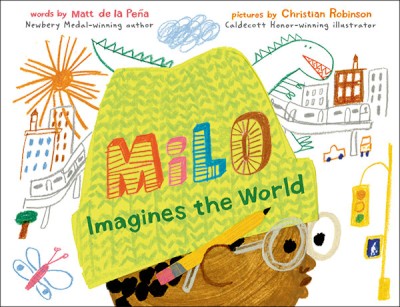
A: Christian just turned the illustrations for Milo Imagines the World (Coming in Feb, 2021!), a new book written by Matt de la Peña about a boy and a girl on a train who are going to visit their mother in prison. The boy imagines stories for all the passengers, and one of those stories has a surprising ending. Christian thinks, and I agree, that it's really important to tell the stories of kids going through all sorts of things.

Christian ended his presentation with a drawing demonstration and a reminder to kids everywhere that they matter. You Matter is now a New York Times bestseller! Follow Christian Robinson on Instagram and on Twitter.

Thursday, July 9, 2020

Jen Finds Fantasy's Roots in Mythology, Fairy Tales, and Folklore


I’m more of a fantasy reader if I have to chose a seat under under the whole Sci/Fi Fantasy umbrella. I loved reading Greek myths when I was younger, and reading fantasy books that incorporate myths or folklore are my jam.

What do I think of as a myth? How about -  a classic or legendary story that usually focuses on a particular hero or event to explain mysteries of nature, existence, or the universe without much basis in fact. Myths exist in every culture; a culture’s collective myths make up its mythology. Here are some fantastical books that bring myths jumping right out of the page!

City of Brass by S.A. Chakraborty is one of my favorites. The first in the Daevabad trilogy*, this lyrical historical fantasy brings to vivid life ancient mythological traditions of an Islamic world. Set in the 18th century Egypt, a young woman with an uncanny gift for healing unleashes a supernatural being and sets in motion an otherworldly adventure.

*Side Note - Book 3, The Empire of Gold was just released June 30th.


Another example of mythology making its way into a fantasy novel is Tomi Adeyemi’s Children of Blood and Bone. The first in the Legacy of Orisha series that's set in a kingdom with traditions and mythology reminiscent of Nigeria and greater West Africa. Eleven years ago, Zelie’s mother was murdered on the night magic left her people, a night known simply as “The Raid.” The brutal King Saran ordered the slaughter of all Maji, thus keeping the next generation under his heel. But that was then, and this is now. By coincidence or maybe divine intervention, Zelie has a chance to restore magic to her people. It’s a long and treacherous journey - one that will change Zelie and her companions forever. A compelling tale filled with magic, betrayals, danger, and heroines who are forces to be reckoned with. Children of Blood and Bone is explosive, and I loved everything about it!

Next, is from Silvia Garcia Moreno. Her latest, Mexican Gothic is a Gothic novel and not a fantasy. But I enjoyed it so much that it made me want to read more of her works.

I think I’ll dive into Gods of Jade and Shadow, which is a fantasy steeped in mythology and is out now in paperback! The Mayan God of Death sends a young woman on a harrowing, life-changing journey in this dark fairy tale inspired by Mexican folklore. The Jazz Age is in full swing, but Casiopea Tun is too busy cleaning the floors of her wealthy grandfather’s house to listen to any fast tunes. Nevertheless, she dreams of life far from her dusty small town in southern Mexico. Yet a new life seems as distant as the stars, until the day she finds a curious wooden box in her grandfather’s room. She opens it and accidentally frees the spirit of the Mayan god of death, who requests her help in recovering his throne from his treacherous brother. Failure will mean Casiopea’s demise, but success could make her dreams come true. In the company of the strangely alluring god and armed with her wits, Casiopea begins an adventure that will take her on a cross-country odyssey from the jungles of Yucatâan to the bright lights of Mexico City and deep into the darkness of the Mayan underworld.

Moving on to Fairy Tales, which I think of as a story often intended for children that features fanciful and wondrous characters such as elves, goblins, wizards, and even, but not necessarily, fairies. Fairy tales are often traditional; many were passed down from storyteller to storyteller before being recorded in books.

The Bear and the Nightingale by Katherine Arden (the first in The Winternight Trilogy) is an enchanting mix of fairy tale, fantasy, and historical fiction, set in medieval Russia. Nestled between the northern wilderness and civilization is a village where old and new traditions live side by side. Vasya, the last daughter of Pyotr and Marina, is born on the howling winds of autumn. She is different from the others in her village. Like her grandmother, she is gifted with powers that are her birthright. As time goes by, Vasya will be tested. Caught in the conflict between the old spirits and the new religion, Vasya must do everything in her power to save her family and village. Katherine Arden’s novel is a rich, mesmerizing novel. It’s the fairy tale you’ve been waiting for!

Another topic that interests me is Folklore, which refers to tales people tell. Traditionally passed down by word of mouth rather than written in books, though many books have been written with folk stories as their inspiration.

One awesome collection is A Thousand Beginnings and Endings, edited by Ellen Oh and Elsie Chapman. It’s a collection of short stories by sixteen bestselling and award-winning authors who reimagine the folklore and mythology of East and South Asia. This collection has something for everyone, from fantasy to science fiction to contemporary stories of spirits, magic, family, love, and heartbreak are combined with elements from modern teens’ lives. In a starred review, Kirkus calls this “An incredible anthology that will keep readers on the edges of their seats, wanting more.”

The stories are endless when it comes to reading Fantasy books that draw from folklore, myths, and fairy tale elements, which can make for an enriching reading experience. Be prepared to fall down the rabbit hole.

Tuesday, July 7, 2020

Madi Loves Crime! The True Crime Blog


From Madi: I have never been shy to talk about my love of true crime. Books, documentaries, podcasts, anything dissecting and exploring the subject will have my attention. So even though an entire bookshelf of my very small apartment is full of different true crime books, I keep buying and reading more. But I noticed something about my collection: almost all of the books are black and red. Yes, I’ll Be Gone in the Dark is black and yellow, and The Stranger Beside Me is more of a musty blue, but it is still overwhelmingly red and black. So I took a look in my macabre assortment and picked out some of the best reads that also happen to color coordinate.

Zodiac by Robert Graysmith was one of the first true crime books I ever read. I listened to it on audio book during a cross country drive - you know, to relax. It was so enthralling and so terrifying that it cemented true crime as my new favorite genre. I actually don’t own my own copy, as I didn’t want a short and squat bright yellow mass market. But recently, I was going through our true crime section when I found a new edition that - surprise! - is a red and black paperback. It still includes pictures of the ciphers and notes sent to San Francisco newspapers, just now in a more appealing red and black form. Of course, the stylish cover is just an added plus - the book itself is definitely one of my favorite true crime books ever written.

If you’re looking for more of a true crime anthology, I suggest yet another black and red book: Unsolved Murders by Amber Hunt and Emily G. Thompson. This book includes some famous examples like the Zodiac Killer and the Black Dahlia, it also includes some lesser known murders that are still shrouded in mystery. I have been knee deep in my crime obsession for about four years now, and this book still introduced me to cases with which I was unfamiliar. It includes twenty-one unsolved cases in total, and it is the perfect spooky sampler.

Perhaps the best-known true crime book is the original black and red tome: Helter Skelter by Vincent Bugliosi. I tried reading this for the first time as a freshman in college, but was so scared by the crime scene photos (which are edited to be less gruesome, I might add) that I just returned it to the library so I would stop having nightmares. A few years later, I picked up another copy and couldn’t stop reading. Though it is admittedly one sided since Bugliosi was Manson’s prosecutor, it is regarded as the truth behind the Manson cult and the infamous murders they committed in August of 1969. The little details about how the case gradually broke open still give me chills. If you are a true crime fan, this is essential reading.

There is a new book about the Manson family that just came out in paperback, and though I am admittedly only halfway through it, this bright red book has already earned a prominent place on my shelf. Chaos: Charles Manson, the CIA, and the Secret History of the Sixties by Tom O’Neill aims to find what Bugliosi missed or perhaps even omitted. I know it seems like everything that can be written about the Manson murders has been, but this book offers different angles I have yet to read about (and I spent a semester in college learning about the cult). This book solves the single perspective problem of Helter Skelter by exploring who might not have been so forthcoming during the initial investigation. It is a truly fresh take on something that happened over fifty years ago.

As strange as it might sound to categorize something true crime as a coffee table book, that’s kind of what He Had It Coming by Kori Rumore and Marianne Mather is like. It’s not full of gore like Helter Skelter (unless you are disgusted by bedazzled leotards), but it does include things like newspaper clippings and police files to get a firsthand understanding of the women who inspired the musical Chicago. It also includes how these murderesses and their crimes became a Tony winning Broadway show and an Oscar winning film, so if you enjoy murder and show tunes, you are in luck. It’s definitely the tamest of the books on this list, but still black and red and worth reading.

I know that there are so many different true crime books out there in so many different colors, but who says creepy can’t be chic? If you’re the kind of person that likes a shelf to double as décor, this is definitely a great collection that can be used as a style piece. Whether you want a classic or a new take on true crime, one thing is for sure: there’s a good chance your book will match a color theme.

Monday, July 6, 2020

Around the World in Eight Cookbooks - Part 2


You waited, he delivered - here's part 2 of Conrad's culinary journey around the globe! If you missed it, read part 1 right here or just scroll down the blog!

Smitten Kitchen​ by Deb Perelman. My daughter loves this book, and I am utterly unqualified to go against anything she has to say on the matter, so I won’t. She is, as usual, quite right. Normally, I abhor vegetarian cooking that merely substitutes vegetables for meat. Were I to become a vegetarian or vegan, I would go whole hog (so to speak) and adopt a cuisine that never really came about as an attempt to wean carnivores from meat. Having said that, I would probably bow to the inevitability of my own inconsistency, and would eat this dish.

 Mushroom Bourguignon

2 Tbs. olive oil, 2 Tbs. butter, softened, 2 Lbs. mushrooms (criminis or portabellas, something dark and earthy), in chunks, 1 Cup pearl onions (or just a bunch of white onions cut into small chunks … let’s face it, peeling all those tiny onions is more trouble than they’re worth. Or I guess you could always buy them frozen.), ½ Carrot, diced fine (or you could even, GASP, use a whole carrot!!!!), 1 small yellow onion, finely diced, 1 Tsp. fresh thyme (or dried), Salt and pepper to taste, 2 cloves garlic, minced 1 cup red wine (the better the wine, the better the result …),  2 Tbs. tomato paste, 2 Cups broth (mushroom broth, if you can find it, otherwise any vegetable broth or even beef), 1-½ Tbs all purpose flour

In a dutch oven, over high heat, melt 1 tbs of the butter with 1 tbs of the olive oil. Sear the mushrooms and onions until they take on color (3-4 minutes). Remove from the pan. Lower heat to medium, add the 2nd tbs of oil. Add the carrot, yellow onion, thyme, and a few pinches of salt and pepper. Cook for 5 minutes until onions start to brown. Add garlic for 1 more minute. Add more salt and pepper. Add wine, scrape the bits of stuff from the bottom of the pan, turn the heat way up, and reduce the liquid by half (4-5 minutes). Stir in tomato paste and broth, bring to a boil, then drop heat to simmer another 10-15 minutes until everything is done. Combine flour and remaining butter, and add that. Stir together. Taste for seasoning, adjust things accordingly. Serve over egg noodles with sour cream and parsley.

This recipe comes from Sunset Mexican Cookbook​ by the Editors of Sunset Magazine - this is another of my mom’s cookbooks and I doubt it’s in print anymore - there are lots of Mexican cookbooks that would have this recipe in them. Try The Art of Mexican Cooking by Diana Kennedy (ed. note - currently backordered, call the store about this one if you're interested, or for another suggestion!)

Guidado de puerco con tomatillos

 Mexican food has really been on the short end of the stick when it comes to respected international cuisines. It is second to none! It is so much more than tacos and enchiladas, although, to be fair, tacos and enchiladas are pretty good eating! This dish is just ridiculously good.

2 ½ lbs boneless pork (shoulder? Tenderloin? Whatever… pretty much anything), 2 Tbs vegetable oil, 1 large onion, diced, 2 cloves garlic, minced (I use more, of course), 1 ½ Cups chopped fresh (or canned) tomatillos, 2-3 diced jalapenos or serranos or whatever type of hot, green chili peppers you like, and however many you like for flavor and heat, 1 Tsp dried marjoram, ¼ Cup chopped cilantro (okay, here I’m good with that), ½ Cup water, Salt

Trim fat from pork and cut into 1 inch cubes. Heat oil in 3-4 quart pan over medium heat. Add meat a bit at a time in batches so it browns instead of greys (all sides). Remove from the pan. Add onion and saute until translucent. Return meat with its juices. Stir in garlic, tomatillos, chilies, marjoram, cilantro, and water. Cover and simmer until meat is tender (about an hour) - you can also do this in the oven at 350 degrees.  Spoon into a bowl and serve with sour cream and cilantro sprigs.

And now to get fancy.

The Africa News Cookbook​ by Patricia Ford (this is out of print - my copy is pretty old and thumbed. Try The Africa Cookbook: Tastes of a Continent by Jessica B Harris) African cuisine is too varied for a single book to do “it” justice - this recipe is West African, specifically from Ghana.

Hkathenkwan (Groundnut Stew)

1 chicken, cut up into 7-8 pieces, or 2-3 lbs of boneless, skinless chicken cut into 2 inch cubes, 1 inch of ginger, peeled and sliced, ½ an onion, 2 Tbs. tomato paste, 1 Tbs peanut oil, 1 Cup diced onion, 1 Cup diced tomatoes, ⅔ Cup peanut butter, 2 Tsp salt 2 chilies, crushed (or 1 tsp cayenne, or to taste),
1 medium eggplant, peeled and cubed, 2 Cups fresh or frozen okra, cut into rounds

Boil chicken with ginger and the ½ onion in 2 cups of water. In a separate large pot, heat peanut oil, add tomato paste, diced onion, and tomatoes. Stir occasionally and cook until onions are soft. Remove chicken from its pot and add to cooking tomatoes, also add ½ of the stock it was cooking in. Add peanut butter, salt, and chilies. Cook for 5 minutes. Add eggplants and okra. Continue cooking until everything is done. Add more broth as needed. It should be a thick stew when finished. Serve over rice.

And now to get crazy elaborate, but so worth it!

From Paella​ by Alberto Herraiz: There is no dish in the world that I like more (to cook or eat) than paella, Spain’s national dish. A paella can be really basic and simple (it developed as a way to handle leftovers) or incredibly intricate and involved. Like a tagine, paella is named after the vessel it cooks in, which is essentially a flat frying pan. You can easily make do with any flat-bottomed pan or pot you may have at hand. You need to prepare before you get down to business:

Sofrito (basically, tomato sauce)

2 Tbs olive oil, 1 tomato, diced, ½ red onion, diced, ½ red bell pepper, diced, 3 cloves garlic, minced, Salt, and pepper

Heat everything in a small pot until hot, then drop to simmer. Mash things up as they cook until you have a thick sauce, Transfer to a small food processor, and process into a sauce. Add a pinch or two of smoked paprika. Set aside until ready to use.

Fumet (basically, a broth)

Combine until you have 2 cups: ¾ Cup clam juice, 1 Cup chicken stock, and ¼ Cup white wine. Add onion skins, 6-8 black peppercorns, whole herbs, shrimp tails - whatever you think will enhance the flavor. Bring to a quick boil then drop to a simmer. Let it simmer for at least an hour. Keep adding more juice/stock/wine to stay at 2 cups. Strain out all the crud so you just have broth. Put back on super low heat. Add a pinch of saffron.

And finally, The Paella:

1 ¾ - 2 Cups fumet, ¼ Cup olive oil 2-3 cloves of garlic, minced, 15-20 medium sized shrimps (about ½-1 lb), A whole chicken in pieces or 1-2 lbs boneless skinless chicken but cut into bitesized pieces, 4-5 small pork sausages or the equivalent in Spanish (not Mexican, too spicy) chorizo or andouille), cut into rounds, ¾-1 Lb squid, about ⅔ sacs cut into rings, and the rest tentacles cut however you wish, 1 Cup bomba rice (Spanish, small grained rice that readily absorbs liquid, arborio is an okay substitute, but is really not the same thing - you could use long grain, if you must), ½ cup or slightly more of sofrito, ½ Tsp (or more) of Spanish smoked paprika, ¼-½ Tsp (or more) of saffron threads, Salt

Relax. Take a deep breath. Ready? Having made the sofrito and fumet separately, and chopped and diced everything so you have them when they are needed:

Preheat oven to 300 degrees Heat olive oil in your flat bottom pan over low heat until it is hot. Turn heat up to medium and add the garlic, fry until it’s golden brown. Add the chicken to the center of the pan. Brown on all sides. Push to the edge of the pan. Add sausages. Brown. Push to edge with chicken. Add squid. Cook until the sac rings swell and become white. Push to edge with chicken and sausage. Add shrimp. Cook until they turn pink. Mix it all together. Drop heat to low and add rice. Mix thoroughly until rice is everywhere. Do not let the rice burn. Add sofrito and mix thoroughly. Add remaining paprika. Mix, you know, thoroughly. Pour in fumet. Add remaining saffron and mix (sigh) thoroughly. Cook on low for 17 minutes. Turn heat up to high, and cook for another 5 minutes. Stir constantly and don’t let it burn to the bottom of the pan. Scrape it up. Taste to make sure rice is mostly done (al dente, as it were) and for seasoning (keeping in mind that the flavors will intensify in the oven). Put it in the oven for 12 minutes. Remove and let sit for 5 minutes.

If it has slightly burned to the bottom while in the oven, you have done well! That is called the socarret (crust) and is prized as the most flavorful part of the dish. Serve with a big salad and a nice glass of sangria or fruit juice.

These books and dishes are far from comprehensive. I could have easily chosen eight different recipes from each book, or eight different books for each cuisine, or indeed, eight different cuisines. Enjoy any of these or similar recipes they may inspire. They are basically straight out of the books, but are mere launching pads for your culinary excursions. Your imagination is the only limit.